


冒险岛2
Chinese scientists develop electrode coating to address signal loss and tissue adhesion problems in long-term brain-computer interface implantation_我的网站

一 | 8月22日,2026年省五人制足球超级联赛常规赛第十五轮战报来了!。
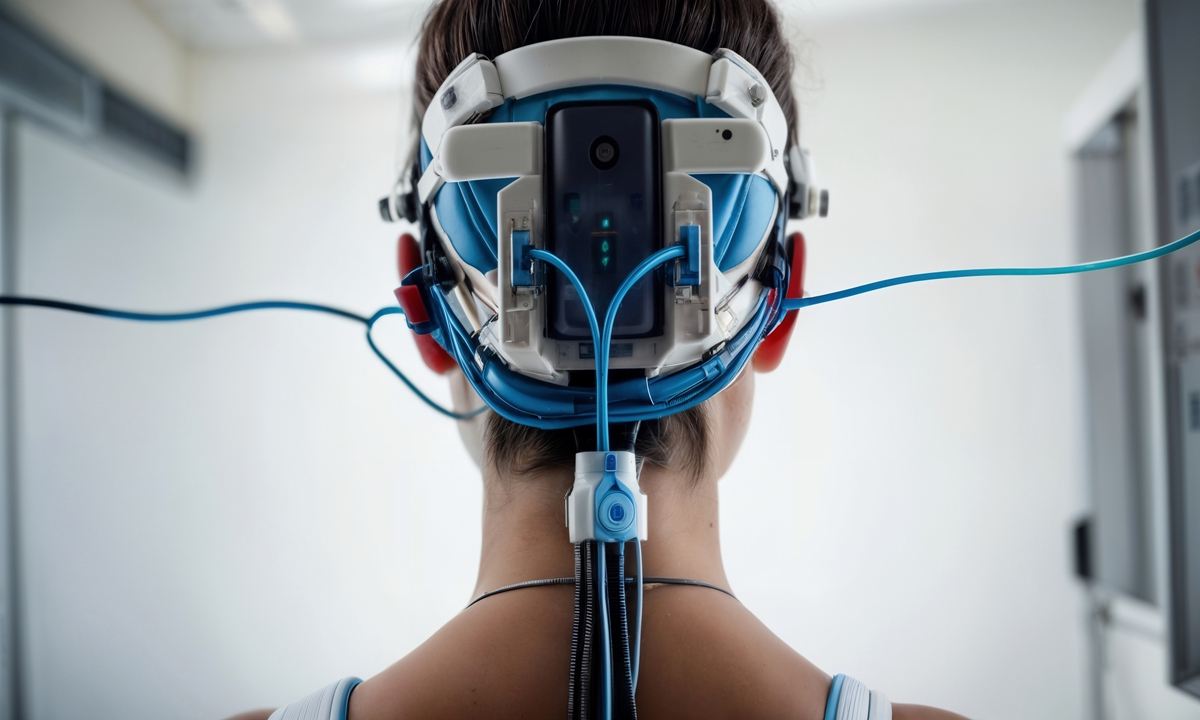
Chinese researchers have developed a multifunctional electrode coating that addresses key challenges in long-term brain-computer interface (BCI) implantation, including signal loss and tissue adhesion, bringing BCI one step closer to clinical application, the Global Times learned from the research team behind the findings on Sunday.
As an emerging field combining neuroscience and artificial intelligence (AI), BCI faces a major challenge of ensuring long-term compatibility between electrodes and brain tissue. Previous clinical trials showed that immune responses could cause implanted electrodes to retract after just three months, severely reducing signal quality and the number of available channels.
This problem stems from chronic inflammation triggered by implants, which creates insulating scar tissue around electrodes and separates them from neurons. Irreversible adhesion between electrodes and brain tissue after long-term implantation also makes device removal risky, potentially causing brain injury during follow-up surgeries.
Experiments showed that flexible neural electrodes coated with this material could operate stably in the brain for more than 300 days and could be safely removed without causing damage. This means the universal coating technology can make electrodes not only operate stably over the long term but can also be safely removed and replaced after aging, paving the way for long-term BCI applications.
Developed by the research team led by Zhang Wei at the Technical Institute of Physics and Chemistry, Chinese Academy of Sciences, associated with Beijing Tiantan Hospital, Shanghai Institute of Microsystem and Information Technology and NeuroXess, a high-tech life science company specializing in BCI technologies, the cationic alternating peptide electrode coating preserves electrode flexibility and conductivity, while offering antibacterial, anti-protein adsorption and immune-rejection-inhibiting functions.
A 300-day animal study showed the coating's effectiveness. Bare electrodes experienced a sharp loss of recording capability after 90 days of implantation and could barely detect neuronal signals after 300 days. In contrast, coated electrodes maintained stable recording channels and consistently captured neural signals above 155 microvolts.
In terms of neural modulation, after 300 days of implantation, conventional electrodes required a current of 100 microamps to induce weak limb responses, while coated electrodes triggered clear movements with only 2 microamps, improving modulation efficiency by 50 times.
Notably, the removal tests highlighted a key advantage of the coating that electrodes no longer form irreversible bonds with brain tissue. In the experiments, the coated electrodes were removed intact, with minimal damage to the surrounding brain tissue, Zhang told the Global Times on Sunday.
。
Current article:http://1h4.tandianxiuzhutiaoshoudiamei.pics/news/20260826_761609.html
Published on:12:49:13
 Xi holds talks with Jordan's king
 比亚迪海洋网MPV预计年底上市 总经理称市场独一无二
 区委常委会第一百六十九次会议强调抓紧抓实防汛 强化协同联动
 2026年“左宗棠与边疆治理”学术研讨会在新疆哈密举行
 8歳の男の子を反省させる目的で山中に置き去りか 28歳母親と交際相手の28歳男を逮捕 男の子が近くの施設に助け求める 静岡
 "이진숙, 여자 전두환으로"…제명결의안 가결
 上蹿下跳,行情的主线是什么?
 暑期档乱成一锅粥:多部电影紧急撤档 上映期说变就变
 抚顺布贴画惊艳亮相辽宁省第二届职业技能大赛
 漫说 丨 沧州跨境电商“乘风起” 冀货出海“势正劲”
 Putting money where it matters: How China can better 'invest in people'
 风雪中坚守,撑起通信“保护伞